For the day-to-day running of a company and its internal culture to be easier and more adherent, it is necessary to adapt the team to new processes such as agile methodologiesmethodologies, which bring about a renewal and transformation in a more dynamic and strategic more dynamic and strategic HR.
Therefore, understanding the concept of agile methodologies is the first step towards adapting it to the HR scenario. In this way, it is possible to combine technology, innovation and modernity with processes capable of stimulating and engaging greater employee productivity.
It's important to remember the main differences between traditional and agile HR, since both differ in their objectives. While traditional HR focused its efforts on delivering targets and results, developing the team on an individual basis, agile management seeks to value its talents by allowing employees to be responsible for their own growth and performance.
As such, there is a lot to transform within the processes of an organization that wants to work with agile methodologies. Read on and learn how to make your management more strategic, what the benefits of agile HR are and how to apply these methodologies in your company.
Follow us!
What are agile methodologies?
Regardless of the segment or size of a company, it is true to say that its objectives and goals are linked to results that are not only positive, but also happen much faster. Therefore, focusing your processes on more agile applications is the path to more constant and assertive deliveries.
In the agile methodology, the process takes place in a more dynamic way, where there is room for adaptations and transformations in real time; these are short cycles that allow for more fluid and rapid actions.
The term agile methodologies originated in the field of technology, based on the Agile ManifestoIt changed the way software was developed (development at scale) and made companies' results more satisfactory and transparent.
The corporate world needs more collaborative, flexible and effective practices so that its products and services can make an impact on the market, giving companies their competitive edge and quality over others.
In practical terms, Agile is made up of multidisciplinary processes with techniques that make project management much more flexible, taking the focus off bureaucratic processes and aiming for greater efficiency in performance. Due to its results, the method soon spread to other areas and that's what we'll cover next, understanding the concept from the point of view of developing an agile HR department.
What is agile HR?
Unlike traditional HR, the concept of agile management is focused on processes that make the day-to-day running of the company more flexible, with high quality in its deliveries and greater dynamism in its actions.
People management needs to be aligned and focused on building efficient, high-quality teamwork, and this requires different ways of improving internal processes.
In agile HR, some concepts cannot be ignored, such as:
- Planning;
- Transparency;
- Digital tools;
- Training.
Finally, so that professionals don't get stuck in processes and cycles that are too long and bureaucratic, it is essential that institutions and companies adapt to the new market reality and increasingly seek to implement agile methodologies for a much more assertive and efficient HR.
Agile methodologies in HR: what are the benefits?
As mentioned earlier, one of the main benefits that adopting agile methodologies can bring to HR is that it creates a much more objective, clear and fast work dynamic. As a result, it is possible to transform work processes and achieve a new level of excellence in your deliveries.
Clearly, agile methodologies applied to the HR sector bring several benefits and advantages to day-to-day life that only add value to the business. Check out some of these benefits now!
Increased productivity
Because the processes are simpler and shorter, professionals are able to maximize their results by increasing their productivity. In this context, work is much more objective and assertive, allowing professionals to increase their performance in their tasks and, consequently, their performance.
More independent professionals
With clear goals and objectives that are very well defined and distributed among the teams, employees are able to make more assertive and efficient decisions for the success of their deliveries. This is because there is greater predictability and chances of success, which allows decisions to be made with much more confidence and independence.
Exchange of knowledge
In an agile methodology there is a great exchange of experiences and knowledge, with different opinions and visions in all teams and centers. This only helps to ensure that the end result is as satisfactory as possible. In other words, there are opportunities for these exchanges to take place in a direct and simplified way.
Career growth opportunities
With the mapping of the main points that need to be improved and with the freedom and autonomy that professionals receive by adopting a more agile HR, there is a great opportunity for growth in their careers, as it increases their agility and allows for continuous collaboration and helps in their professional growth and development.
Simpler processes and no red tape
With the transformation that agile methodologies bring about in a company's internal processes, there is a big change in the work routine. As a result, actions are simplified and debureaucratized, which only helps to make demands and deliveries more effective.
Time optimization
As has already been made clear, processes here are more optimized and automated, which allows for a reduction in the time taken to carry out processes and services.
Time and team management help to apply more efficient and objective methods.
Retaining talent
When the methodology is applied well, employees achieve their goals, feel valued, useful and more productive. In this case, it's a consequence of the employee feeling well at work, which allows this talent to remain in the company.
What are the types of agile methodologies?
There are various types of agile methodologies and their specifications, the main and most popular of which are: SCRUM, LEAN and KANBAN. Each model has its own methodology, strategy and proposal for functionality and therefore requires in-depth study of its practices so that you can choose the one that best suits your needs.
Scrum
Initially, it is a set of practices that allows you to achieve the desired results much more quickly and efficiently. Project management within the Scrum methodology requires a representative, a leader who will guide the team through each stage of the process, helping with the division of tasks.
Once the goals and objectives have been presented and the team has been defined, it's time to separate the processes by Sprint, which are short cycles that can last from a week to a month, so that the team can carry out their activities and then meet to evaluate and validate their deliveries.
The Scrum method allows for greater flexibility in deadlines and adaptations and corrections throughout the process, which only helps to achieve much greater efficiency in the execution of projects. Scrum in HR can be an important ally for leaders and managers.
Kanban
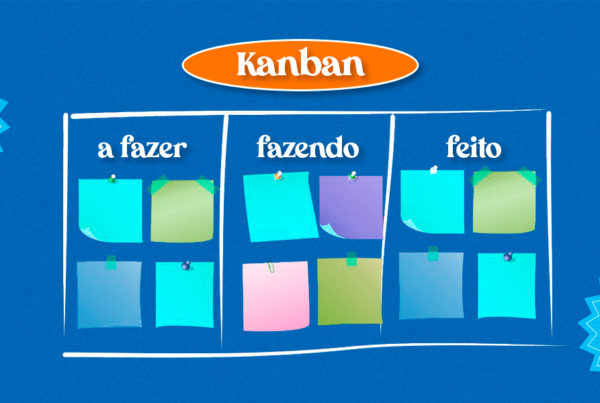
The Kanban system works perfectly as a methodology for organizing activities, a kind of checklist that helps make day-to-day HR much more agile, dynamic and centralized.
With Kanban, people management is carried out in a coordinated manner, defining teams, tasks, targets, feedback, rewards and much more. Applying the Kanban system to the organization of projects makes it much easier to control the flow of work, visualize the demands of each sector and also strengthen internal relations with more engaged and motivated teams.
HR can adopt this agile methodology strategy to improve its results and promote greater engagement between teams.
Lean
HR must help ensure that a company's organizational culture is aligned with its objectives, goals, vision and values, as well as enabling its employees to feel increasingly involved and engaged in their activities.
In order for activities and projects to be planned efficiently and their deliveries to be validated in a positive way, human capital must be developed by adopting the Lean methodology, so that it is much easier to carry out processes and activities with less bureaucracy and more assertiveness.
The principle of Lean is to reduce waste and simplify actions to achieve faster deliveries, problems and failures are easily identified and activities can be optimized with quality results.
HR can then carry out its tasks much more precisely and leanly, making its management more agile and productive.
Agile HR: how to apply it?
Whichever methodology is chosen by the leadership, it must not be forgotten that it must be based on very well-structured planning so that it can be inserted into the company's organizational culture. Therefore, there are a few steps that should be taken to ensure the greatest productivity and effectiveness of agile methodologies. Follow them!
Defining goals
The first step to making HR more agile is to define the goals and objectives you want to achieve. Next, it's important that these goals are aligned and clear to everyone on the team. By understanding where you want to go and how each process should be carried out in order to reach the final objective, everything becomes easier and more assertive.
Choosing the best agile technique for HR
Before work can begin, it is important to identify which of the available agile methodologies is best suited to talent management. By delving deeper into this subject and understanding every detail of agile practices, it is possible to extract the maximum amount of information and define the working method.
Trained and engaged leaders and employees
Changing the team's mentality and making each professional feel confident about following the practices of the agile methodology is essential for successful results. Therefore, training professionals is one of the fundamental parts of the process, so that the team is aligned and achieves the desired results.
Finally, it is important to emphasize that truly efficient people management is one in which professionals are respected and their skills are used to their full potential. An intelligent career plan and great opportunities for growth are essential bases for attracting and retaining talent.
Did you like the content? Be sure to check out our other materials and content on the blog. Subscribe to our newsletter and don't miss out!