
To achieve great results, it is necessary to carry out a complete management of your goals and analyze the effects of the last few months. The second half of the year is the ideal time to create or update your strategic plan, especially by evaluating your method of analysis. Many managers find it difficult to monitor and measure their indicators, which can lead to uncoordinated targets, unmotivated staff and a lack of alignment.
In this context, we will explain how to use OKR goal management in strategic planning to gain greater vision, prioritize goals and plan for the coming year.
What are OKRs?
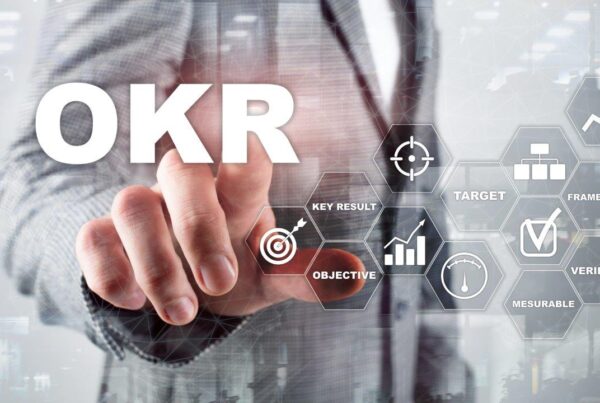
The management model - OKR is designed to be simple and agile, connecting everyone's work to the overall strategic planning of the business, helping to achieve the desired results of the plan itself, such as: growth, profitability, new markets, repeat customers, among other objectives. The big difference between traditional planning methods and OKRs is that the goals are frequently defined, tracked and re-evaluated. OKRS not only help build results, they help develop people and teams. And this happens through education, involvement and development opportunities, as well as reinforcement and the leader-leader relationship.
Structuring and aligning OKRS
The main benefits of this approach are: alignment, transparency, measurement, prioritization, empowerment and overcoming. Create alignment, context and purpose for your team to establish what really matters, work in a more focused way, allowing you to improve the quality of team and employee deliveries. By using OKRs to set quarterly goals, you can get everyone moving in the same direction, with clear priorities. Remember that OKRs are not a substitute for strategy, they are great for giving people specific goals to achieve, as they help concentrate efforts to reach the big goal.
With goal management it is possible to break down activities, routines and allow employees to understand how their work influences the company's goals and objectives. All OKRs must connect and support each other: the employee's objectives must reflect the team's objectives, the team's objectives must reflect the area's objectives, just as the area's objectives must reflect the company's objectives. In this way, all the individual efforts contribute to a complete vision and to more significant results.
Using OKRs in your strategic planning
OKR goal management promotes discipline and focus in activities, every decision is made based on one question: will this bring us closer to our goal?
OKRs also establish clear standards for measuring progress. Since everything is based on numbers and quantified data, it's possible to measure precisely how far you've come towards achieving your objectives and how far you need to go in a tangible and exact way. The OKR methodology can vary according to each business, each location has subtle differences, but there are OKR best practices to follow when carrying out the implementation. Ideally, OKRs add value to the company and the employees involved, and are a powerful tool for managing employees and targets.
Intelligently measure your results
In management, it is often necessary to be an expert in a particular subject in order to make results happen. With the excess of goal management spreadsheets, managers end up getting lost in the midst of so much disconnected data, creating a difficulty in identifying what the priority focuses are and how to control the team's efficiency.
A Improvefy has developed internal research showing that most of the correction plans registered in goal management software are not efficient. In our design and productivity improvement studies, we identified that practically none of the tools on the market analyze the information that people include in them. With its all-in-one concept, the Jano platform was designed to have all the main tools needed for good management in one place.
Using the Janoplatform, OKRs have greater transparency and communication, allowing the monitoring and evolution of goals, based on indicators of interest, making it possible to follow all progress in an automated way. This way, everyone knows what the main priorities are, how each job contributes and how to maximize the results as a group.
Although defining, communicating and aligning OKRs takes time, it's important to remember that OKRs are a means to an end. Each objective and its associated key results are just the stepping stones to achieving a broader strategy around your company's goal. It is important that everyone understands this distinction and that the strategy is clearly defined before the OKRs are established.
Applying the okr methodology to your planning
The difference between OKRs and other planning strategies is that the goals are for all employees, from the CEO down to the junior analyst. The OKR process process connects individual, team and company goals, so that everyone moves in the same direction. To reflect this ideal, each employee must submit OKRs that they think the department should prioritize. A team meeting is held to collectively develop the team's objectives and align them with the company's goals.
Employees then define individual OKRs that reflect and support company and team goals, meeting with their managers to analyze what they believe is best to work on in the next quarter.
Also hold mid-quarter review meetings to share progress and make any adjustments. The meetings have two purposes, the first being to build a common understanding of what each goal is and its value to the company, and the second to prioritize which goals have the most value to begin with. Annual OKRs, in particular, don't have to be rigid: if along the way you've discovered that the goals you set last year aren't accurate, there's no need to stick to them.
At the end of the quarter, hold a closing meeting where everyone shares and explains their results, outlining the adjustments they will make for the next quarter.
When is the best time to start your strategic planning?
After reflecting on the quarter's performance, start setting OKRs for the next quarter. With OKR-based goal management, you are essentially creating a list of what you need to focus on, with clear and agreed objectives, following measurable progress. One of the biggest benefits of starting your strategic planning using OKR goal management is that it gives all employees better decision-making.
Insisting on using different management tools can be extremely risky, as it becomes extremely difficult to consolidate all the information. That's why, at the first signs of poor performance, it's recommended that you look for management software to help you keep track of targets and results.
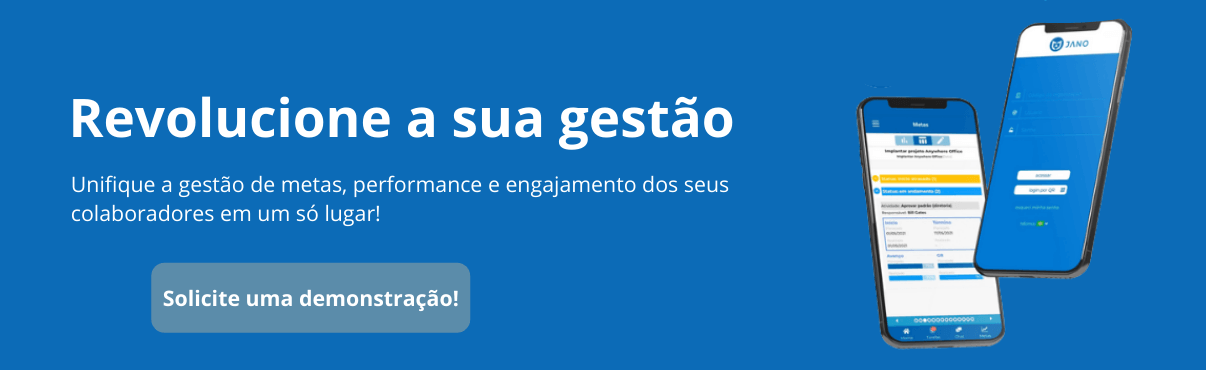
On the basis that we often know how to do things, but need to use easier means to achieve the desired result. A Jano platform provides a single solution for all the information and tasks that people need to carry out, improving their productivity, monitoring and identifying possible bottlenecks, facilitating integrations and control of management areas with the use of machine learning and artificial intelligence. If you want to focus on your priorities, measure your progress and achieve your results with greater assertiveness, book a free demo.
Jano as management software
If you're interested in making your management even more efficient, it's worth considering a complete platform like Jano. Experience the power of the first all-in-one platform with artificial intelligence support. Our technology helps you propose correction plans, analyze goal consistency/causes of deviation from plan, predict employee performance. As people learn what works and what doesn't, you can improve team productivity.
The world's first all-in-one management platform, it unites the main management processes, performance, routines and projects in a simple and complete way, in one place. Our aim is to inspire people to take ownership of their deliveries and guarantee the best results for their businesses by exploiting proactive management technologies. At Improvefy, we can help your company develop a strategic process based on a methodology that meets your unique needs, incorporating various tools such as OKR, performance analysis, task management, projects and much more.
Automate the entire process of monitoring OKRs so that managers can see progress, saving time and resources. Find out which activities are taking the most effort, prioritize tasks, create planning schedules, update statuses and manage all the company's processes automatically. We want people to focus on their knowledge of the business and their area, analyzing market trends, competitors and customer needs, and leave it to us to support the management and development of people. Talk to one of our experts and find out how to boost your results using an all-in-one platform.