
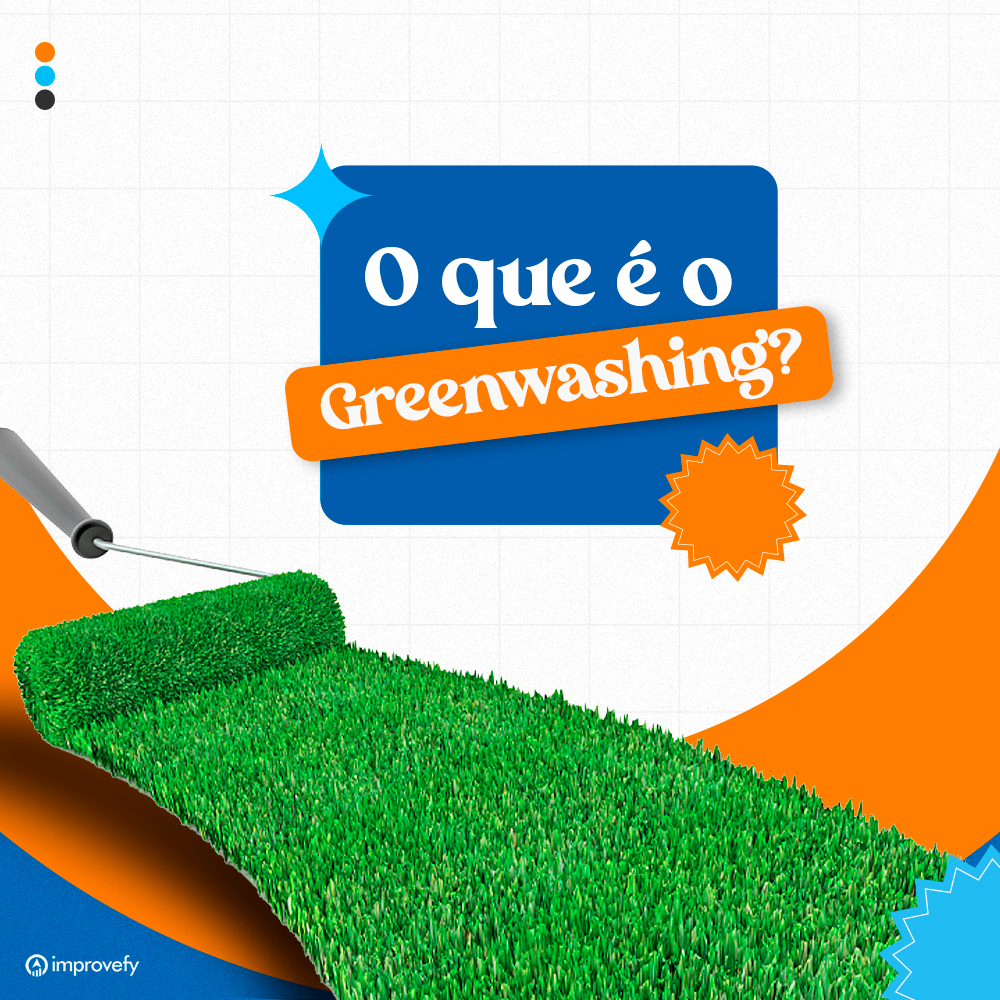
The ESG strategies are increasingly in focus within companies and play an important role in establishing internal and external transformations in organizations. It is necessary to discuss not only the fundamental pillars that involve environmental, social and governance issues, but also other practices that permeate this discourse, including the term "greenwashing".
Thus, knowing and understanding what greenwashing means and what its consequences are greenwashing is what can determine the success or failure of a company's ESG actions.
Being sustainable means looking at the world around you with more responsibility and concern for the way you consume.
In this sense, it has never been more urgent to talk about measures to reduce the harmful effects and negative impacts that companies end up leaving on the environment.
As a result, consumers have become more aware of these issues, seeking out companies and brands that embrace more sustainable practices.
But not everything is what it seems and there are many misconceptions and mistakes in this area. greenwashing and how your company can avoid this practice.
What is Greenwashing?
A term that can be translated as "green lie", "green wash" or even "green make-up".
The term refers to the deceptive behavior of brands that attribute their practices to sustainable issues and concern for the environment, but in reality have no real commitment to this issue.
These are speeches and advertisements that seek to convey a misleading message of adopting ecologically correct practices.
To this end, companies carry out actions and communication strategies that lead their consumers, partners and employees to believe that they are really working towards sustainability, but without implementing these measures in practice.
As the ESG agenda is on the rise, some companies, industries and private and public organizations have spotted the perfect opportunity to take advantage of the practice of the moment, without actually implementing it. It makes things even more dangerous, given the serious damage and lawsuits that this kind of behavior can lead to.
Main examples of greenwashing
Those who practice greenwashing know the importance and influence that the media and advertising have in reinforcing this false idea of a sustainable company, and so they focus mainly on a discourse that is not at all enlightening, with labels and packaging that can be misleading.
To better understand and recognize this practice, we've put together some important examples:
Follow us!
- Statements without proof: a good example of this is when cosmetics packaging puts "vegan product" on the label to sell an image of potentially being sustainable and caring about animals. However, in practice there is nothing to back up this claim, and they continue to use animal testing.
- A classic is the promotion of "consume less water", conveying the idea of being environmentally friendly, but not paying attention to other more serious issues such as reducing the use of plastic, for example.
- Vague information is when a company communicates inaccurately, leaving its customers and consumers in doubt as to what it really means or without providing any data to back up its claim. An example of this are vague expressions such as "sustainable", "environmentally friendly" and the famous "eco-friendly".
There are many other good examples of situations in which brands use misleading advertising to promote a sustainable discourse. And very famous cases of greenwashing that need to be discussed so that they can actually be abolished from the market.
Famous cases of greenwashing
As we have already mentioned, there are several examples of the practice of greenwashing on the market and some are quite famous, precisely because they involve giant brands and companies.
The intention here is to look at what was done and how they got around the image crisis situation, as well as, of course, not repeating this scenario. Follow along!
Nestlé
What happened to the world's largest packaged food company, is a good example of how some companies can stumble over the actions they need to take in terms of good ESG practices and just "dress up" their products to make them look sustainable.
In 2008, Nestlé launched a bottled water with the following slogan: "bottled water is the most environmentally responsible product in the world". Needless to say, the brand was widely denounced for this slogan and had to go public to retract it.
Currently Nestlé wants to make all its packaging recyclable or reusable by 2025. There is an effective action plan to discuss the ESG pillars with more responsibility and commitment.
Fiat
The automobile sector is also one of the main segments that generate negative impacts on the environment. Aware of this, the company planned, executed and publicized a campaign with misleading and unfounded statements.
This is because in its campaign the company advertised the use of a more sustainable tire, "a green tire" that promised to have less impact on nature by being fuel-efficient and having an ecological disposal.
The company was notified by advertising regulator CONAR and had to redo its entire campaign communication, now without mentioning the supposed "politically correct" advantages, since they were not based on any evidence.
In short, these two famous cases only prove to us that the idea of ESG needs commitment and ethics from its practitioners, lest it be replaced by greenwashing.
Find out how to avoid greenwashing
As a responsible company that really wants to reduce the negative impacts left on the environment. The ideal way to avoid the phenomenon of greenwashing is to set clear and assertive ESG goals and objectives for everyone in the company.
Investors need to be clear about these processes and understand what attitudes and actions the company has taken to fit in with the ESG culture. Once these points are aligned with the practice, it's time to pass on and disseminate communication that is committed to the truth and responsible for explaining every detail.
Precisely because we know that there is still no way to be 100% sustainable, but there is a way to commit to reducing negative results more and more with ecologically efficient waste management.
How should your company position itself in relation to greenwashing?
To avoid the practice of greenwashing, your company needs to have a direct, clear and transparent relationship with its employees, investors, partners and customers. Encouraging commitment to real goals that can be measured and proven, pointing to environmental certifications and proving the information disclosed.
Thinking about how your company should position itself in the market to avoid the greenwashing and really follow the pillars established by the ESG.
It is essential to understand how the company wants to be seen and recognized by its niche market, understanding that the greatest allies in gaining credibility and authority are the consumers and therefore they must be treated with honesty and respect at all times.
Would you like to learn about the basic principles of ESG and adopt them into your company culture? Consider our help to be truly sustainable. Come and talk to the Improvefy team team and get all the support you need to create an effective ESG agenda.
Did you like it? Take the opportunity to visit the blog and follow other posts.