
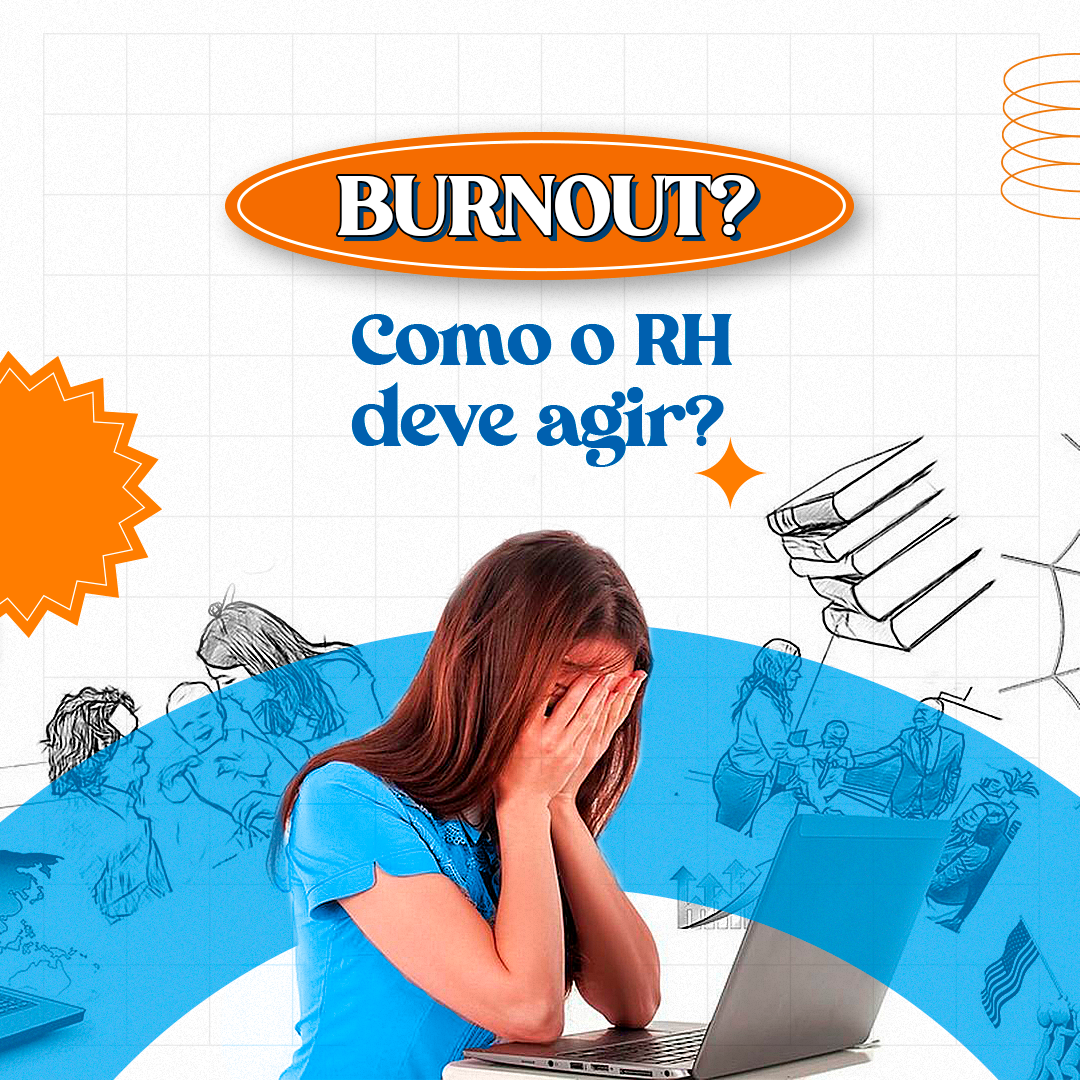
When work is no longer done in a balanced way and there are constant episodes of stress and professional burnout, it is important for HR to know how to act to avoid what is known as Burnout. But long before that moment arrives, strategic actions need to be implemented to prevent what is one of the main challenges facing companies today.
In a market that is constantly changing and undergoing various external interferences, such as the need to adopt remote working, it is essential that companies and organizations see this step as fundamental to retaining their talents and gaining more and more credibility in their environment.
Continue in this article to understand what burnout is and what strategies HR should adopt to promote change in your organization!
What is Burnout?
Burnout syndrome can be understood as chronic stress that occurs in the workplace. According to the World Health Organization (WHO), burnout is the result of mental and physical exhaustion which can cause emotional and physical symptoms such as excessive tiredness, irritability, anxiety, low energy, among others.
This syndrome has a cascading effect and tends to cause various problems for both the company and the professional. An employee who is experiencing the symptoms of burnout can reach the limit of exhaustion and suffer from serious psycho-emotional problems, not to mention low productivity and loss of performance.
Therefore, it is up to HR professionals to promote actions that allow this employee to be welcomed and manage to reverse this situation or even prevent their talents from reaching this level of burnout.
Main signs and symptoms of burnout syndrome
To prevent employees from experiencing a work environment that makes them ill, it is important that those responsible for people management know how to identify the first signs and symptoms of burnout syndrome.
In this way, it is also possible to detect possible problems in management and promote greater changes in the working environment.
Among the main symptoms are
- Exhaustion
- Anxiety
- Irritability
- Low motivation
- Falling productivity
- Nervousness
- Constant headaches
- Lack of attention
- Insomnia
- Memory problems
- among others.
These symptoms are some of the behavioral, emotional and physical indicators of burnout syndrome and have increasingly affected professionals who do not feel open to discussing these problems with their leaders and managers.
Collecting information about your employees, carrying out a performance evaluationfor example, is very important to be able to analyze the whole context and thus promote real changes for the benefit of the company and its talents.
What are the consequences of burnout in the company?
The negative impacts that companies face with their employees suffering from burnout are numerous and can significantly damage their income. That's why it's so important to be aware of and understand the possible consequences:
-
Turnover
With the drop in deliveries and the company's results, there is a high rate of turnover. This is because the employee no longer feels productive and much less valued in their work environment, which can lead to them resigning and with it a rise in turnover.
-
Need for overtime
When employees are no longer able to deliver all their activities within their working hours, they may have to work overtime in order to complete their tasks and achieve their goals. This may well make the routine even more exhausting.
-
Company devaluation
A company that is known for "sickening" its employees will certainly not be well regarded in the market. That's why organizations need to understand that looking after their talents is the first step towards looking after their interests.
-
Labor cases
Offering good working conditions is fundamental to making the organizational climate increasingly pleasant and healthy, thus avoiding possible administrative and labor lawsuits.
In short, there are many possible problems and consequences that Burnout Syndrome can cause for a company and its employees. It is therefore essential to establish an action plan to help everyone carry out their tasks in the best possible way in a healthy and safe environment.
How can HR help?
HR can and should take advantage of all the resources and tools at its disposal to look after its human capital. In this sense, it is worth implementing actions and strategies aimed at avoiding and accommodating episodes of physical and mental exhaustion.
Prioritizing employee well-being is one of the main objectives when treating the disease or even minimizing its effects. That's why we've listed some of the measures that need to be taken:
Encourage humanized communication
Understanding the importance of humanizedclear and direct communication has on people means encouraging actions that make this communication more assertive and closer, helping to generate strong and lasting connections between everyone involved.
In this way, employees can find easy ways and channels to communicate their difficulties and seek solutions. These attitudes help to exchange information and share ideas.
Thus, building a healthy relationship between leaders, managers and their employees lies in being accessible and creating opportunities for real humanized internal communication.
Promote a pleasant organizational climate
For HR, offering good working conditions can be related to several factors, and one of the main ones is helping to create a healthy and balanced organizational climate.
When there are a lot of complaints and disagreements between employees and leaders or managers, it's the ideal time to find out if there are situations of mismanagement or if communication is breaking down, which can only worsen the relationship between everyone and cause even more stress.
Encouraging dialogue and mutual cooperation makes the work environment increasingly pleasant and productive.
Focus on employee well-being
When our mental and physical health is compromised, it is urgent to create ways of identifying the causes and finding viable solutions to this problem. Management that cares about its employees will be focused on establishing actions that promote the appreciation of their talents and encourage them to take care of their health.
This includes encouraging feedback, allowing autonomy in tasks and providing a healthy work routine with greater performance.
Other important steps to help combat burnout can be to offer flexibility in the work routine, ensuring the use of effective tools to optimize tasks and encouraging strategic breaks.
A Improvefy helps thousands of people every day to organize their work routine and track their results in a centralized and optimized way. And for your company to achieve its goals and reach new heights in the market, it's important to pay attention to your most precious asset: people!
Did you like the content? Keep expanding your knowledge and be sure to follow our various materials.